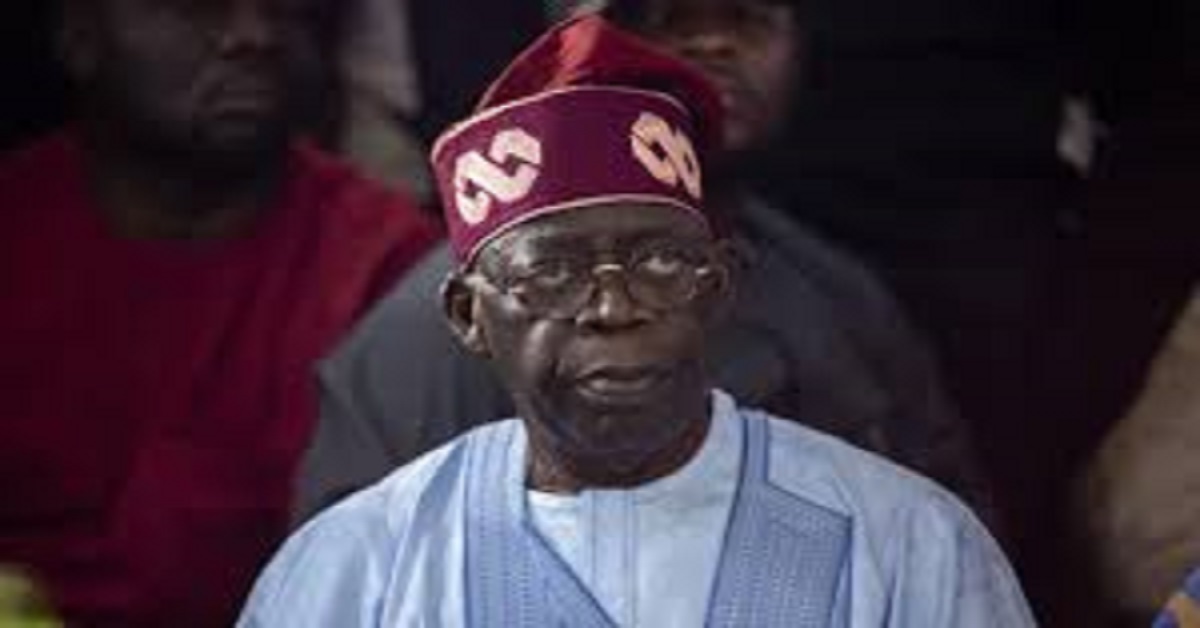
ASHE Foundation president, Prince Justice Faloye, has stated that the current APC administration under the leadership of President Bola Ahmed Tinubu is creating more hardship in the country than expected, noting that the devaluation and subsidy removal carried out by his administration was a generational ploy to devalue common Nigerians’ real wages back to slavery levels. He said that it was to cream off and destroy the country’s productive capabilities.
Prince Faloye, an economist and civilizational activist, in a statement to the media, mentioned that the sad part is that the President is not alone since his presidential opponents also supported the same re-enslaving polices, being part of the neo-colonial guards indoctrinated to arrest their people’s economic and political development, cyclically.
He said: “This is not the first time our real wages will be devalued and we are economically returned to slave incomes, making millions flee abroad. The 1986 Structural Adjustment Program returned us to ‘Ground Zero,’ we rebuilt, and this generation is facing the same re-enslaving policies. It is time to say ‘Never Again’ shall we return to economic slavery after this episode!”
Faloye described slavery in this context as a ploy to exploit another human being to achieve economic gain, noting that there are different ways to enslave, ranging from physical, institutional and mental, that it might actually take time for a people to realize that they are enslaved and exploited.
Explaining further with empirical facts, Faloye stated: “It took centuries for the evils of Transatlantic slavery to become glaring. It took decades for colonial exploitation to become unbearable and resisted. Now, we still haven’t woken up to realize that devaluation is to return us to economic slavery, while subsidy removals are cancellations of social contracts of abundance.
This global racial economic caste system has evolved over the last five hundred years, during which both Africa, the richest continent, and Africans, the oldest and most diverse DNA makeu,p have been brutally exploited for economic gain.
”The Portuguese 21st August 1415 capture of Ceuta, Morocco, the frontier trade route through which Africans had ruled up to Paris, sparked the Afroasiatic Middlemen migration down the River Niger to the fringes of the Indigenous African Civilizations. The Portuguese came along the Atlantic coast in search of gold until they got to the underbelly of the core of the Indigenous African civilization.
”The Afroasiatic Islamic civilization, through its herdsmen and clerics, tried to take over the population center of the Indigenous African civilizations that supplied the Trans-Saharan trade route of Gold and other resources.
The Europeans’ quest for gold wasn’t profitable, and they were too small in number to take over like the Islamists, so they decided to copy Indigenous African crops like sugarcane and cotton, first on small African islands like Cape Verde and Sao Tome, before stumbling on the Americas with a similar tropical climate.
“Initially, using Slaves in Cape Verde and then American Indians, who were nearly annihilated, Europeans realized that sugarcane and cotton farming required the unique insect-resistant sickle cell trait of West Africans, so they resorted to kidnapping and enslaving Africans on slave plantations upon which a new global economic caste system was built. In Africa, they overthrew existing socio-political leadership, supplanted usurpers, and even armed and created their own bandit empires to wage war to capture slaves.
“It wasn’t a blind wholesale kidnapping and selling of African slaves, but identified different skillsets – Yorubas and Igbos of the lower Niger had the highest sickle cell percentage. Also Yoruba were skilled in gold mining needed in South America, and were also good at managing large numbers of people since they had moved from a theocracy to a monarchy.
The Igbos still at the theocracy stage were viewed as too rebellious. Those of the Senegambia were skilled in rice production, etc. Eventually, the population of Africans was ten times that of Whites in some slave colonies like Haiti, resulting in armed struggles.
“With increased slave resistance and industrialization, the racist capitalist economic system switched from American plantations to African colonization for extractive industries used to unfairly exploit Africa’s resources, while using the people to produce cash crops and minerals, continuing the practice of just paying enough to the masses to survive. Since the currency of each colony was dictated by the colonial master, periodically, the colonial masters used various methods to devalue and scrape away surpluses and any profit accumulated by the colony.
“In the Americas, not all slaves were equal. Not only did the enslavers know and differentiate the ethnic groups, but there were differences between house and field negroes, freshwater (generational slaves), and saltwater negroes (newly landed slaves).
”The new colonial system of collectively enslaving to exploit Africa and Africans needed administrators who were trained in missionary and government schools, from where the best were extracted for further indoctrination in Western universities and academies, before returning to become the new neocolonial guards.
“The neo-colonial guards thought and saw the world through Western civilizational perspectives, since their own indigenous African Ifa-Afa-Iha-Efa civilization perspective had been bastardized and balkanized into tribes and regions to create a local prebendal system of freshwater and saltwater negritude.
”The genuine cultural leadership of the ethnic nationalities was disconstitutionalized and relegated to the new class of European indoctrinated neocolonial guards, from whom ethnic and political leaders were imposed.
Since the acknowledgement and power of the neo-colonial guards didn’t come from their Indigenous African civilization, a divisive competitive system was created whose focus was on what the leaders get for themselves and their family from the colonial system, with no consideration or, at best, tokenism for the ethnic group they represent.
“Abrahamists were the freshwater Negroes that saw from similar civilizational perspectives, which was why the Northern Afroasiatic Islamic civilization were preferred house Negroes whom they could share power with. The North was trusted with political power, while Southern Christians were allowed to engage in transportation and distribution.
Initially, with no indigenous banks, the British creamed off national surpluses, but the Second World War diverted their attention, and due to soaring commodity prices during the war, Nigerians were able to pool their resources to build over 100 banks that the colonists couldn’t easily cream.
”After the war, the colonists disingenuously shut down over 100 banks, which heightened the call for economic independence and then political independence.”
In addition, he further explained: “A few of the students created the National Youth Movement that rejected and challenged the imposed coloniality and pushed for independence and equity. With the help of Russia and African traditional institutions, they pushed but got a compromised independence.
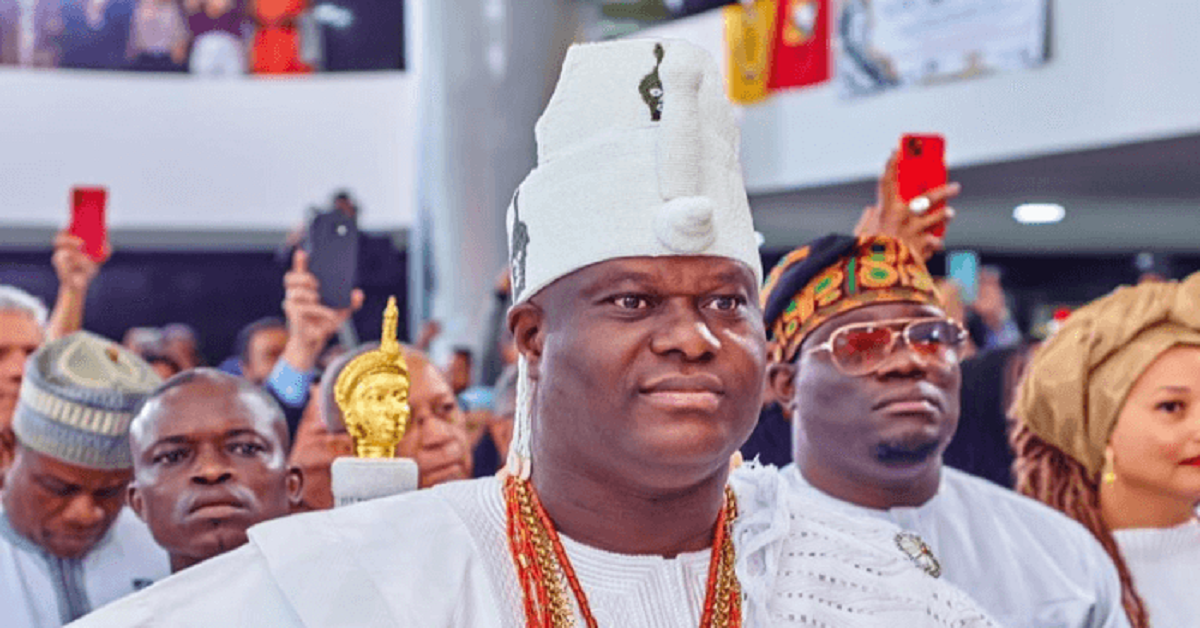
In Yorubaland, the oldest and most populous indigenous African civilization group, with the backing of Ooni of Ife, Oba Aderemi, a new leader, Chief Awolowo, was backed to adopt the prevailing economic development polices to free the people from economic slavery, with policies like free education, free health, rural development, and full employment.
“The trusted Northern Afro-Arabic civilization, also being Abrahamic imperialists, made an attempt to take over the Balkanized indigenous African civilization and remove the British colonists from the power structure.
Regardless of the reasons, Western intelligence services conspired, using political and economic destabilization, to overthrow the newly independent African nations within a decade.
The Western-trained, indoctrinated, and weaponized armies were to throw out the agreed-upon constitutions and restructure the nations back to overly centralized political systems, which only loyal colonial guards were allowed to rule.
“With the two most populous indigenous African groups, Yoruba and Igbo, politically disenfranchised shortly after independence, the British devised ways and means to reinstate their economic exploitation and re-enslavement.
”The prevailing global economic development polices based on the Big Push financed with Keynesian deficit budgeting had evolved in the 1930s to stop the spread of communist revolutions from Russia across Europe and the Americas.
“The Keynesian macroeconomic policies of deficit budgeting led to the greatest transfer of wealth to Whites in a generation, especially since industrialization after slave plantations left the majority out of the economic loop. It was this economic perspective that was adopted by newly independent African, Asian, and Caribbean people who had been economically exploited by Western slavery and colonization, notably on the Slave Coast, where Chief Awolowo coined the policy as AFENIFERE in the Yoruba language.
“In the seventies, a new re-enslaving plan was hatched through the Chicago School of Economics and the Bretton Woods institutions that were created after the war to restore the productive capacities of Western nations.
”The political economic slavery model of Adam Smith, known as classical economics, was reintroduced as neoclassical economics, which was later mislabeled as neoliberal economics, which was pushed to stop the government from empowering and uplifting non-Whites.
In the USA and UK, Black employment and income sources were attacked under rationalization and commercialization policies, while economies were shut down across Africa.
“The contrived Oil Crisis was used to put financial pressure on most African nations, forcing them to break social contracts that were used to empower and uplift the masses through education and economic liberating infrastructure. In 1978, Nigeria was pressured to stop education subsidies, and with the crash of oil prices, it was forced to stop many social services.
Most important was the push for devaluation in order to devalue real wages and return the masses to slavery income levels, which was barely enough to survive, as well as to crash the productive sectors.
“The neo-colonial political elite that subscribed to the re-enslaving economic policies were backed by the West against their people’s wishes, while those that rejected them face economic strangulation and political destabilization, like corruption propaganda.
”In cases where the leader refused to follow the dictates of Western financial institutions, their national income was directly attacked. In Nigeria, oil production was halved by unknown oil thieves, despite being impossible to ship and refine one million barrels a day without a trace.”
Faloye further added that despite physical decolonization, the people remained enslaved through coloniality of power sources, whereby political and opinion leaders are moulded and acknowledged by the Western colonial masters’ institutions.
He said coloniality of knowledge sources warped the thinking of the masses in tribalism, religion, and other self-destructive thinking, making it very difficult to have a truly revolutionary leader, noting that the result was, instead of democracy, what transpired was kakistocracy, the rulership of the worst in society.
He explained that those who could be blackmailed and controlled by the colonial power were only allowed on the national stage.
“Afenifere, the pro-people group, knowing that the coloniality-imposed army won’t allow anybody outside the neo-colonial clique to rule, in order to avoid being banned, they accepted and presented those known to be close to the ruling regime, hoping to use them to push progressive ideals. Unfortunately, this was like riding a tiger’s back since Tinubu, who became governor of Lagos, the key Yoruba city-state,e consolidated absolute power against the Yoruba masses, with neoliberal economic policies.
“After twenty-four years of exploiting the world’s most populous and prosperous Black city-state, Lagos, Tinubu went for the presidency, and was backed by the West because he had done numerous favors for them over time. Knowing what had transpired with previous leaders who rejected the Western neoliberal economic policies to reenslave, Tinubu, immediately upon getting to power, agreed to the economic reenslaving of Nigeria.
He immediately cut wages and income by 300% with devaluation and subsidy removals, which pushed millions into abject poverty.
“Politically, he attacked the foundations of democracy and federalism in pursuit of absolute centralized power. The turning of local governments that were state administrative units into federating units was to weaken states and centralize power for efficient exploitation by the foreign exploiters.
”With the subjugation of the legislative and judicial arms and the breakup of viable political parties and civil rights groups, he soon had absolute power. This earned him unfettered access and backing from the Western nations.
Faloye, in his conclusion, called for efforts to enshrine principles that will not give room for repetition of the same mistakes.
“To ensure this quagmire never repeats itself after Tinubu, we must enshrine some principles in our collective consciousness.
First and foremost, the electoral system has to be reformed, and cultural custodians and traditional polities of ethnic nationalities must be in charge of the electoral body through the Nigerian Traditional Council. Second, never again should we accept neoliberal economic policies like devaluation and subsidy removal.
Third, we must establish a benchmark for the daily minimum housing to be built and for railways to be laid. There are many more, but these three are the most important to stop cyclical enslavement.”