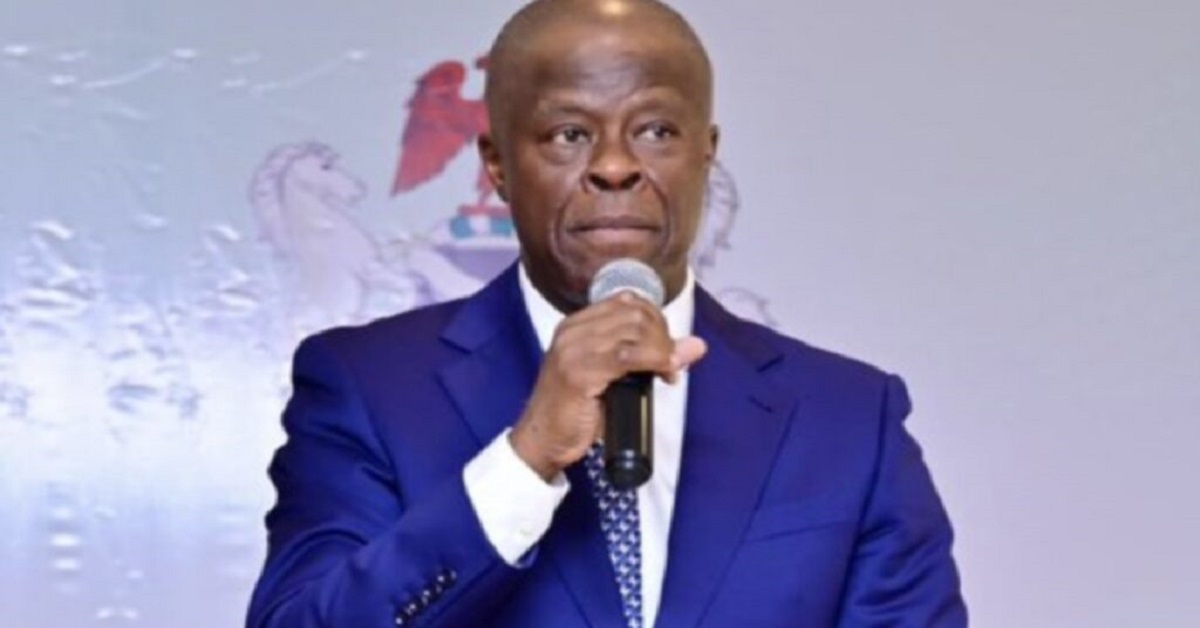
By Collins Nweke
Across African financial and policy boardrooms a midweek development is being processed. It is news that Fitch Ratings has downgraded the African Export-Import Bank (Afreximbank) to BBB. The new rating is just a notch above junk status.
This development is a quiet thunder for the financial analysts. It resonates equally with those of us on the policy ecosystem.
And for ordinary Africans, this development is neither abstract nor distant. One is a Nigerian youth-led digital bridge startup. I incidentally had a first consultancy conversation with them a few hours before the downgrade was announced.
The implications are direct and potentially painful. On the policy side of the ecosystem, we got to unpack the meaning behind the BBB downgrade. It is not just in rating terms, but in developmental and (economic) diplomatic terms.
Afreximbank is not just another financial institution. It is Africa’s banker of last resort in many trade and infrastructure deals when global markets hesitate.
Its strength, credibility, and cost of capital directly influence the pace at which roads are built. It influences how factories are financed.
It plays a crucial role in supporting small businesses. This includes the tech startup I was just getting to know. When global rating agencies question that credibility, it is not just the Bank that suffers. Africa suffers.
How This Matters to the Everyday African?
At the core of Fitch’s downgrade are concerns over the transparency and quality of Afreximbank’s loan book. Many of the loans are to sovereign entities grappling with high debt burdens.
The fallout is predictable. You have higher interest rates on loans. There is reduced access to critical development financing, and weakened investor confidence.
In practical terms, a farmer in Uganda or Kenya may face significant challenges. They may find it more challenging to secure affordable financing for export-grade processing equipment. A startup in Lagos wants to scale across the continent.
Still, they might find their growth strategy stalled. One significant challenge is higher credit costs. Governments may delay or cancel key infrastructure projects, which can impact jobs, public services, and long-term productivity.
We must recognise the connection between macroeconomic trust and microeconomic reality. Otherwise, we risk repeating cycles of financial marginalisation.
African institutions are still perceived as risky or opaque despite years of reforms and rhetoric. The core question rests on how we counter this narrative.
It certainly can’t be with protest but with performance. This is where economic diplomacy comes into play.
Economic diplomacy must become the bedrock of Africa’s 21st-century foreign policy. We must stop treating rating agencies and financial markets as external judges.
We should start seeing them as forums in which Africa must show up. Africa must engage and outperform in these forums.
Downgrade as Wake-Up Call for Reform
For Afreximbank, three key steps are critical:
First, a dramatic enhancement of its transparency and risk disclosure practices is urgent. Fitch’s downgrade was less about bad numbers than about unclear ones. Adopting globally accepted reporting frameworks will help mitigate the perception risk.
Second, Afreximbank must diversify its loan book beyond over-leveraged sovereigns. A stronger tilt toward private sector borrowers is needed.
These borrowers should have solid fundamentals across various sectors and regions. This approach will aid in building resilience.
Third, capitalisation matters. African governments and private stakeholders must step up to bolster the bank’s capital base. This will send a signal to rating agencies and markets that Africa backs its own institutions.
For African economies, the lesson is no less stark:
Fiscal discipline and debt sustainability must be treated as strategic assets. The temptation to borrow without productive investment must be curbed through legislative oversight and public transparency.
Additionally, economic diversification is not a buzzword. It should be a survival strategy. Heavy dependence on commodities and politically exposed infrastructure loans makes countries and their institutions vulnerable to global volatility.
Africa must also build and strengthen its regional financial architecture. A united, well-capitalised, well-governed set of institutions will command more respect, better terms, and lower borrowing costs.
Recent recapitalisation efforts in Africa
Africa has seen several recapitalisation efforts over the last decade. Recapitalisation matters because it fosters stability and resilience.
Strong capital positions enable banks to absorb economic shocks better and support credit growth. Any effort, no matter how little, helps bring local banks in line with Basel III norms.
These norms are widely recognised for promoting robust financial systems. Higher thresholds also drive consolidation, whereby smaller banks merge or exit, resulting in more stable and competitive banking environments.
Recapitalised banks are better positioned to finance the private sector and infrastructure, crucial for African economic development, despite external shocks.
Recent examples include Banco de Poupança e Crédito (BPC) Angola, the Bank of Ghana, and the Bank of Uganda, all in 2017.
The most robust, though, is the Central Bank of Nigeria (CBN). In June 2019, the CBN rolled out a five-year “2019–2024 Road Map.” This plan prioritized banking sector stability.
It included phased recapitalisation measures. In March 2024, the central bank announced a new two-year recapitalisation plan, commencing on April 1.
It set a basic capital requirement for commercial banks at ₦500 billion for international licenses. The minimum capital requirement for national licenses was set at ₦200 billion, and ₦50 billion for regional permits.
The deadline for all was March 31, 2026. Reflecting this, Nigeria’s largest banks, First Bank and Fidelity Bank, are executing multi-billion-naira rights issues and private placements (e.g., First Bank raised ₦150 billion, oversubscribed to ₦187.6 billion; Fidelity is launching a private placement in 2025).
Additionally, Access Holding Plc, the parent of Access Bank, launched a ₦365 billion (US$ 258 million) rights issue. It is considered a US$ $1.5 billion share/bond sale in March 2024 to support the recapitalisation requirements.
A Continental Decisive Moment
Those who see the Afreximbank downgrade as a condemnation are wrong. It is caution, not condemnation. It reminds us that Africa can’t rely on goodwill.
It can’t depend on sentiment in a world governed by capital flows and risk metrics. Africa must earn credibility not through slogans but through systems, not through declarations but through demonstrated performance. As an advocate for sound economic diplomacy, this is Africa’s decisive moment.
Let us treat it not as a setback, but as a sobering moment to recalibrate and recommit to the vigorous work of building trustworthy, efficient, and resilient financial systems. African citizens deserve no less.
About the Author
The author, Collins Nweke is a former Green Councillor at Ostend City Council, Belgium, where he served three consecutive terms until December 2024.
He is a Fellow of both the Chartered Institute of Public Management of Nigeria and the Institute of Management Consultants.
He is also a Distinguished Fellow of the International Association of Research Scholars and Administrators, serving on its Governing Council. He writes from Brussels, Belgium. X: @collinsnweke E: admin@collinsnweke.eu W: www.collinsnweke.eu