By Chris Onuoha
In line with the United Nations mandate to promote water safety through Sustainable Development Goal (SDG) 6, by 2030, Nestlé Waters in collaboration with Organised Private Sector in Water, Sanitation, and Hygiene (OPS-WASH, have committed to taking the advocacy for quality water to all segments of the society.
The group ensures that the drive engages policymakers in both public and private sectors, businesses to schools, and grassroots communities, with the intent to close the knowledge gap around the invisible threats posed by contaminated water.
Recall, the United Nations SDG 6, aiming for universal access to safe and affordable drinking water and adequate sanitation by 2030, recognizing it as a fundamental human right, strategies the drive to involve increasing investment in infrastructure and hygiene education, promoting integrated water resource management, protecting water-related ecosystems, and fostering international cooperation.
The UN-Water agency coordinates these efforts across the UN system to improve water quality, reduce pollution, and ensure sustainable water use for all.
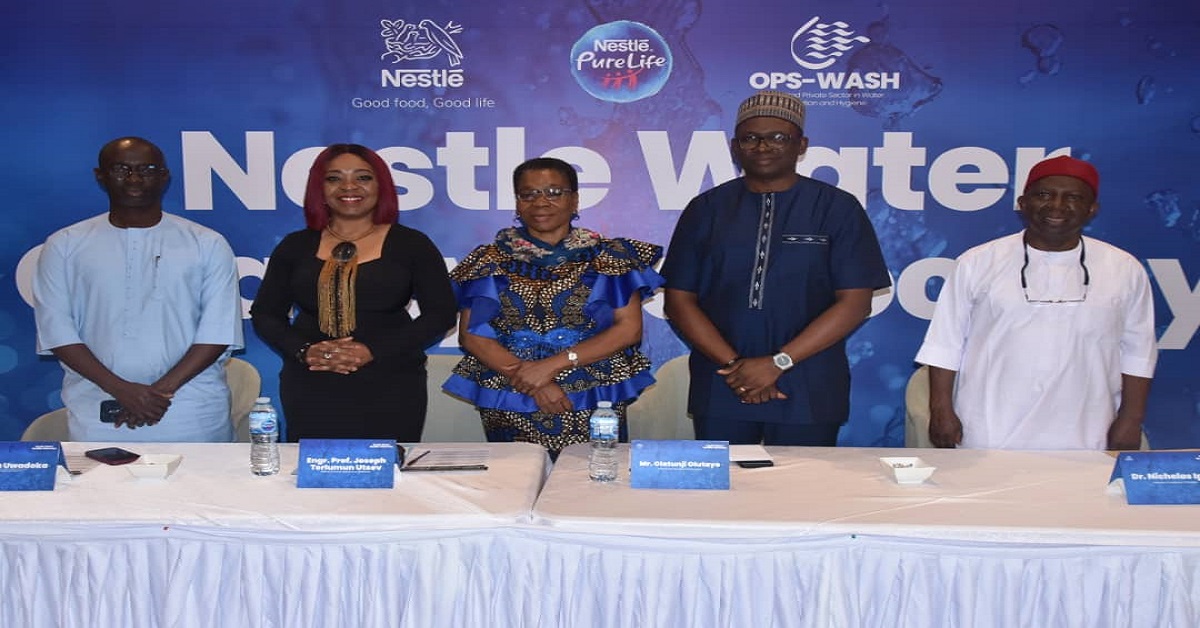
The water safety advocacy drive by Nestlé and OPS-WASH, which was held in Abuja recently, brought together key stakeholders to emphasise the critical importance of protecting the nation’s water sources to protect public health and enhance community well-being.
Speaking at the launch, Mr. Olatunji Olutayo, Business Executive Officer, Nestlé Waters and Premium Beverages, highlighted Nestlé’s strong commitment to quality which is the foundation for the water quality advocacy campaign.
He said: “Water stewardship is a priority for Nestlé Waters. By 2025, we aim for all our sites to be certified under the Alliance for Water Stewardship Standard, underlining our commitment to sustainable water use, community engagement, and responsible watershed management.”
Olutayo noted that these measures align closely with the objectives of the advocacy campaign: promoting universal access to safe water, ensuring transparent monitoring and accountability, encouraging multi-stakeholder collaboration, and pushing for sustainable, long-term solutions.
“Our central message is clear, water safety must become a priority in every home, business, and public institution,” he added.
Meanwhile, the UN’s role in water safety for all under SDG 6 acommodates human right to water, which becomes imperative that everyone regardless of strata or region is entitled to pure quality water for sustainable growth.
Dr. Nicholas Igwe, National Coordinator, OPS-WASH, at the event said: “Water is life, yet millions of Nigerians are still unaware of the quality of the water they consume daily.
This campaign is therefore about more than raising awareness; it is about empowering people with the tools and knowledge they need to safeguard their health by safeguarding their water sources.
”By knowing and protecting our water sources, we can significantly reduce the burden of waterborne diseases and build a healthier, more productive nation.”
Delivering the keynote address, the Honourable Minister of Water Resources & Sanitation, Engr. Prof. Joseph Terlumun Utsev, represented by Mrs. Elizabeth Ugoh, Director, Water Quality Control and Sanitation, emphasised the government’s commitment to improving water quality nationwide and welcomed private sector collaboration in tackling water-related challenges.
In his words: “I wish to commend Nestlé Waters and OPS-WASH for this timely initiative, which aligns with our national drive to ensure that every Nigerian has access to clean and safe water.
”Contaminated water continues to be one of the leading causes of preventable diseases in the country, with serious health and economic implications. This advocacy therefore comes at a critical time, as water quality management remains a top priority for government.”
He explained that nationwide assessments are ongoing in line with the Sustainable Development Goals (SDGs) 6.3.2, adding that increased investments in water quality management will remain central to the government’s agenda.
“Nestlé has set the tone. It is now up to all of us, government, private sector, and communities – to build on this momentum so that safe water becomes a reality for every Nigerian household,” he concluded.
In their goodwill messages, the Minister of Environment and the Minister of Health and Social Security, commended Nestlé and OPS-WASH for undertaking the campaign, noting that it would facilitate the improvement of the quality of water across Nigeria, by creating more awareness to drive the behavioural changes necessary to achieve SDG6.3.2.
Victoria Uwadoka, Corporate Communications, Public Affairs and Sustainability Lead at Nestlé Nigeria PLC, described the campaign as a national movement for water safety rather than a one-off programme.
“Today marks the beginning of a national movement for water safety in Nigeria, but this is only the first step. This campaign will not only raise awareness but also provide practical steps that individuals and communities can take to ensure safe water, improve the quality of life, and support national development.”
She added: “Collaboratively, we aim to turn awareness into action and a lasting change so that quality water becomes a conscious aspiration for every Nigerian.
”By also engaging all stakeholders from policy makers to the implementation agencies, quality water will go from aspiration to a reality supported by behavioural change.”
Talking about behavioral change elicited by Victoria Uwadoka in her speech, people’s attitude towards the sustainability must come into play. The UN-Water, in its key strategies for achieving water safety, streamlines infrasture development which is basically government project.
In both pre and post independent era in Nigeria, quality portable water from government established reservoirs was in focus. This unique source of clean water served the nation for a marginal period before unprecedented neglect sets in.
Such gigantic reservoirs that has strongly stood the test of time as a monument currently serves no purpose. Most of these concrete and high raised water reservoirs begs for attention, which if revisited, would revitalise quality water supply to communities, and eliminate the proliferated satchet water production that poses health risks today.
However, much as Nestlé and OPS-WASH has relentlessly pushed the water safety drive to nooks and crane, government must be very sensitive and proactive in its safety policies towards keying into the UN SDG 6 2030 goal.
According to UN-Water, investing in water infrastructure, such as improved water sources and sanitation facilities, is crucial for expanding access to safe services.
Also, implementing integrated water resources management, including sustainable withdrawals and supply of freshwater, is essential to address water scarcity.
UN-Water in it’s current status report, reveals that despite global progress made so far, billions of people still lack access to safely managed drinking water services, with 2.2 billion people without them as of 2022.
It stated that achieving the 2030 targets will require a significant acceleration of current progress, as the world is currently on track to miss many sustainable water management goals.
In view, the Nestlé Water Quality Advocacy reinforces Nestlé Nigeria’s ongoing commitment to sustainability and community well-being.
It also aligns with OPS-WASH’s mission to mobilise the private sector in achieving national and global water, sanitation, and hygiene goals.
Together, both organisations are calling on government agencies, businesses, civil society, and individuals to play their part in ensuring that quality water becomes a universal standard in Nigeria.