By Collins Nweke
Two unrelated developments in Nigeria’s agro-industrial sector are currently catching headlines. One is the announcement this week of British multinational, PZ Cussons, divesting from its Nigerian palm oil business. It is selling its stake for $70 million.
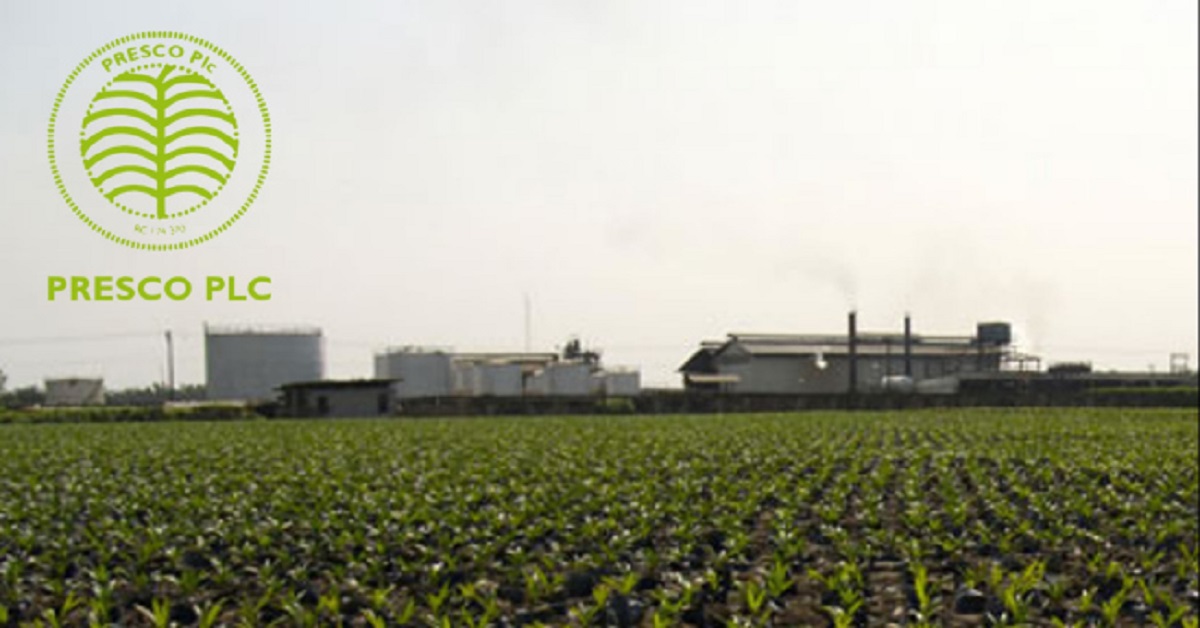
On the other hand, in mid-March last year, Nigerian palm oil giant, Presco Plc, completed a strategic buyback from Belgian agro-industrial group, SIAT, reclaiming a 33-year-old foreign-held interest.
These two events, though in opposite directions, are telling reflections of a broader economic undercurrent.
They are stories of Nigeria at a crossroads, recalibrating its investment climate and economic ownership.Palm oil products
At face value, PZ Cussons’ exit could be interpreted as yet another foreign investor losing confidence in Nigeria’s volatile business environment.
For years, multinationals have battled with macroeconomic headwinds. There are the fluctuating exchange rates.
You have currency devaluations. Added to the mix is the lingering difficulty of repatriating foreign exchange.
The strain has only worsened in recent times. Even the most committed global players are now reevaluating their stakes in Nigeria. And PZ Cussons, a household name in Nigeria for over a century, has clearly read the room.
Yet the story does not end there.Investment Financial products
On the same economic stage, Presco’s acquisition of SIAT Nigeria Limited, the local unit of a Belgian firm that has held sway since 1991, paints a different picture.
That of economic re indigenisation. Rather than a sign of decline, this is a sign that Nigerian capital is growing bolder. It is becoming more confident.
More than that, it is getting more assertive in reclaiming the commanding heights of the economy.
This is clearly a duality. An exit by an international firm and an expansion by a domestic player. Those who call it a contradiction are not wrong.
But please do not fault anyone who chooses to label it a transformation. We are seeing a changing paradigm as the Belgian Ambassador to Nigeria, Pieter Leenknegt, described it yesterday during a Nextier Webinar themed Rethinking International Partnership in a Changing World.
Nigeria is not losing its appeal. It is redefining the terms of engagement. What was once a playing field dominated by expatriate capital is now being reshaped by resilient, indigenous businesses willing to invest in long-term value despite the odds. It is not yet Uhuru. It needs scaling up.Personal care products
Presco’s move aligns with a broader trend in African economic thinking: that prosperity must be homegrown.
The firm understands the risks. It knows about inflation. Just as it is not oblivious of inconsistent regulatory policy. But like Felix Nwabuko, Group CEO Presco plc recently told me during a quick meet-up in Brussels, they equally grasp the opportunity.
With a vast population, growing demand for consumer goods, and a national strategy to reduce imports and boost agricultural output, Nigeria’s palm oil industry remains a fertile ground for investment. There is a proviso though. You must know how to navigate it.
For policymakers, this contrast offers both a caution and a cause for action.Palm oil products
The caution is clear: when legacy investors like PZ Cussons walk away, it signals more than balance sheet woes.
It reflects deeper issues of investor frustration. Nigeria’s foreign investment policy must move beyond lip service to real reform.
Bureaucracy must be efficient. FX policy must be predictable. There is no alternative to transparent regulation, and practical support for doing business.
Those in the economic team of government will be quick to tell us that all of these are already being done. Well, the message is: do more and stop being defensive.
But there is also cause for optimism: local firms are rising. The Presco deal is a wake-up call to support domestic capital with better access to financing, infrastructure, and technology.
Local players, with their rootedness in the realities of the Nigerian market, are well-placed to lead the next phase of industrial growth, if given the enabling environment.Home appliances
Ultimately, the Nigerian economy is not in free fall. It is undergoing a shift. A shift from externally driven development to an internally propelled one.
That shift will not be smooth, but it is necessary. However, government needs to cushion the effect of all unintended consequences that rears their ugly head.
Foreign investment remains welcome. The implied concluding message of Ambassador Leenknegt yesterday was that it is becoming clear that the future belongs to those who are willing to build with Nigeria, not just harvest from it. Belgium is intentional in lining up behind the co-builders.
About the Author
The author, Collins Nweke is a former Green Councillor at Ostend City Council, Belgium, where he served three consecutive terms until December 2024.
He is a Fellow of both the Chartered Institute of Public Management of Nigeria and the Institute of Management Consultants.
He is also a Distinguished Fellow of the International Association of Research Scholars and Administrators, serving on its Governing Council.
He writes from Brussels, Belgium. X: @collinsnweke E: admin@collinsnweke.eu W: www.collinsnweke.eu