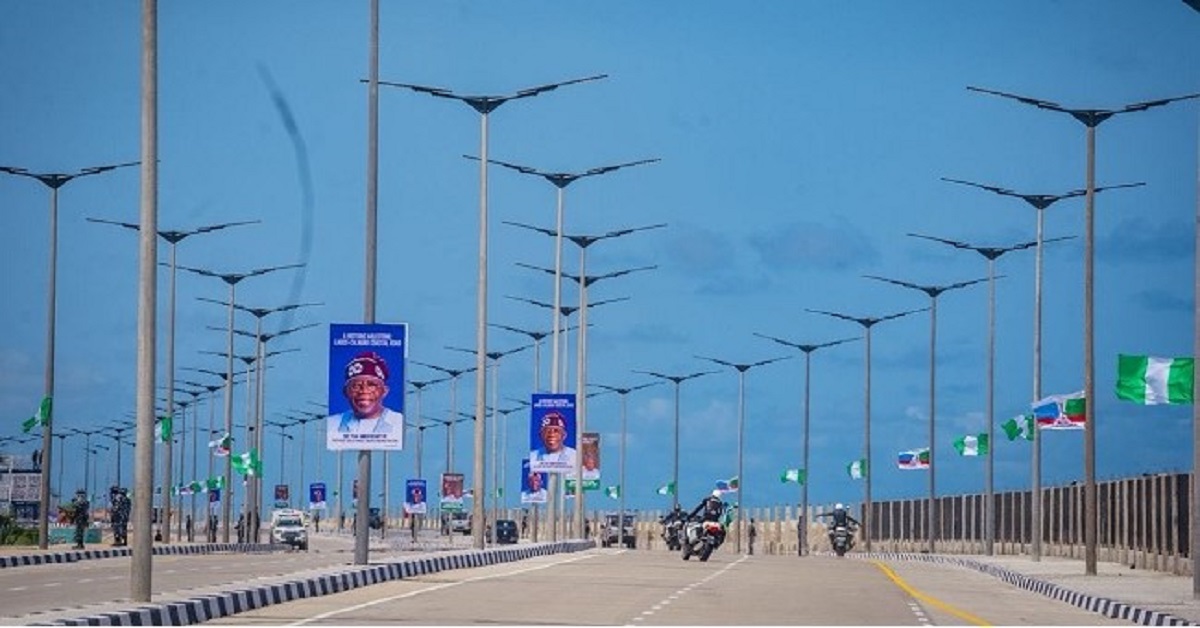
The Federal Government has secured a $747 million loan to finance the coastal highway that will eventually link Lagos State to Calabar.
A Reuters report quoting the Finance Ministry said the syndicated loan led by Deutsche Bank is to finance the construction of the first phase of the 700-km (435-mile) project.
Finance ministry spokesperson Mohammad Manga on Thursday said the loan is the first of its size for road infrastructure in Nigeria.
Deutsche Bank acted as global coordinator in the syndicate, which includes First Abu Dhabi Bank, African Export-Import Bank, Abu Dhabi Exports Office, ECOWAS Bank for Investment and Development, and Zenith Bank.
The initial section of the highway financed by the loan spans 47.47 km, Manga said.
The entire project is expected to cost around $11 billion and be completed in about eight years.
Backstory
The idea of a coastal highway stretching across Nigeria’s southern flank, connecting its bustling economic hub in Lagos to the historic city of Calabar, is not new.
It’s a vision that has quietly simmered for over 50 years, a grand dream first conceived in the late 1970s to unlock the immense economic potential of Nigeria’s coastal states.
Yet, for decades, this ambitious project remained largely on paper, a victim of shifting political priorities, funding challenges, and the sheer scale of its undertaking.
The Rebirth of a Giant: Fast forward to March 2024, and the dream began to take concrete form. Under the administration of President Bola Tinubu, the Federal Ministry of Works, led by Minister David Umahi, officially commenced construction of the Lagos-Calabar Coastal Highway.
This isn’t just any road; it’s envisioned as a 700-kilometer, 10-lane superhighway, complete with a central train track, designed to be one of Africa’s most significant economic corridors.
It will traverse nine coastal states – Lagos, Ogun, Ondo, Edo, Delta, Bayelsa, Rivers, Akwa Ibom, and Cross River – aiming to drastically cut travel times, improve trade, and stimulate economic development across a densely populated and resource-rich region.


